I will revive this old blog for a while, as I want to get away from the constant response to the moment (in Facebook, etc) and dig around a little in the past.
First of all, I have worked on computers since about 1999, and that formed part of my work, as well as play, so I have a lot of back-ups, moved on from old computers. Of course, stuff must have got lost in all the shuffling over 20 years, but some treasure still exists.
For instance, as my work included figuring out the newly-growing internet, and passing on that knowledge to both library stuff and customers (we stopped calling the 'borrowers", and 'users' sounded a bit druggy) I had to experiment with everything, so often had a couple of accounts (so I could look at an account from inside and out). I have no idea how many leftover blogs may exist (or have since died), and websites, and FB accounts, etc.
Most became inactive when social media took over, and we all moved into 'the moment'. Of course, occasional memories pop up, on anniversaries, etc, but generally we live in ephemeral, linear time.
I miss deeper immersion in mythic time.
And so much of that past got recorded. These items seem like the digital equivalent to the boxes of papers that still sit in my den in Cardiff (some of which, but not all, will move up here to the cottage). I will have to go through the boxes and get ruthless. Not easy. I have the same relationship to all this digital material, as back-ups generate duplicates and variations, etc. However much pruning I have done, these things get copied around.
So anyway, will register my progress here, and that includes working on finishing the autobiography, which has hovered about for years, incomplete. Again, it got taken over by 'real-time' interviews and chats, and posts, so that I got bored with much of the material (both memories, and opinions) and didn't feel like going through it all again.
Maybe this rummage through the old stuff might spark a new burst of motivation. We'll see.
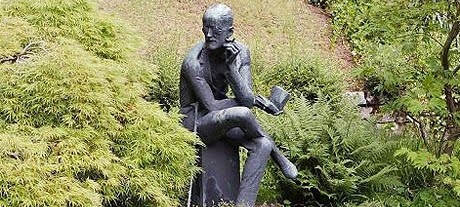
Right...Well...
"Let us do our best, even if it gets us nowhere." Henry Miller
Wednesday 18 December 2019

Monday 28 October 2019
The Three Degrees of initiation

I came across an interesting book, in my mother's collection, by Colin Still, "Shakespeare's Mystery Play - a Study of The Tempest". The only review I can find of this appears on a theosophical site, and doesn't really elucidate the story as he tells it.
I made the above 'chart' as a way of clarifying for myself the ideas the book contains. I can not find this model in any other traditions, and can also find almost nothing about Colin Still (although T.S.Eliot and W.H.Auden seem to have known of his work), so this stands alone.
He uses the four elements, and the three 'transitional' phases between them, making seven steps, in all.
In regards to The Fall, we can see how light/consciousness gets tempted down to this earthly plain, and then can - with sufficient effort or luck, escape again, through a series of initiations, which appear in many traditions.
[edit]
It turns out that Colin Still is not quite as obscure as I assumed, and I found more references to his work in Northrop Frye's late notebooks, etc. More research needed...

Wednesday 23 October 2019
Just get on with it!
I keep meaning to complete an autobiography, which I already started on, and which I even commissioned a cover for, from the excellent Bob Campbell (which is ready to go, on standby).
Of course, I remain schtum about the title I chose, so let's call it Work-In-Process...
Back in the day, I challenged myself with writing 50,000 words in a month, as part of NaNoWriMo - a personal marathon to write a short novel in the month of November. At that speed, an autobiography could get finished before Christmas. I actually finished the marathon half a dozen times. No great books emerged (although I quite liked Infinite Monkeys - and even played the game of getting a cover and promo image from Bobby Campbell, and then publishing it on Lulu, as paperback or ebook, just to see how it all worked). Still, I failed to go back and do a serious edit of most of the other attempts, and the editing process matters much more than just dumping out a first draft.

November looms, so perhaps I should push myself to write at that frenzied pace (1667 words per day) and get the damned autobiography into first draft, at least. I might even enjoy it!
2007: I wrote "Foolproof", my very first attempt at fiction. I struggled, but completed the task. It muddled up bits of my own life, with bits of imagination, and prove simply a slog to the finish. I can't re-read it.
2008: I decided in advance, at least, on a theme, of a quest, and hidden items, and puzzles, etc. This led to "Infinite Monkeys". I still quite like to read bits of this...and I love holding a real book!
2009: This time I wrote "Handwaving", more or less about "Art" and the empty space, the white room, the blank canvas. I think I included a small esoteric group, as well, as a source of inspiration.
2009a: enthused by the process, I also did a film script, on Script Frenzy, "One White Crow".
2010: I wrote "Does Not Compute" aka "Spooking the Herd" which I can't remember much about. Something to do with business, and money, and hustles, etc.
I skipped 2011
In 2012, I decided to actually work to some kind of game plan, so read and analysed a bunch of conspiracy thrillers. I didn't want to have a hero who was ex-SAS, though, who could field strip a bunch of weapons, fly a helicopter, etc, so made him a diffident Englishman abroad. But apart from that...
2012: The Columbus Caper I quite liked this book, and really should go back and look at it again, do some editing, and maybe even follow through with a Lulu version. If it amuses you to see the process, I did the work on Scrivener, and used this blog as a diary of the days of November 2012.
I tried using 2013 to work on the autobiography with the same level of motivation, but it felt like cheating, as NanoWriMo has a specific brief of writing fiction.
And then I pretty well put it all aside. And six more years drifted by... Hey ho. So it goes.
Sunday 1 July 2018
The Ten Thousand Things
Anyone who knows me realises that I have little time for 'religion' or its partner word 'spirituality', simply because I don't understand them. Until someone gives me a clear definition of 'spirit' without bringing 'soul' (an entirely different entity, seems to me) into it.
Still I love the philosophical little text called the Tao Te Ching (for its brevity, if nothing else).
Here's part of Chapter 42:
From Tao comes the One.
From the One comes the Two.
From the Two comes the Three.From the Three come the ten thousand things.
I won't go into what I understand from this enigmatic (and profound) little poem, but I like a description of the actual world we live in as 'the ten thousand things'. When I emerged from the buzzing, blooming confusion of childhood I remember feeling delighted at those ten thousand things - from butterflies to books, from other countries and other languages to art and science by-products, from simple to exotic foodstuffs, and on, and on.
In fact, in the modern idea, we know of millions and millions of things, but a symbolic 'ten thousand' seems a manageable amount for any one human to deal with. After all, I will never meet all the people, read all the books, visit all the countries, watch all the movies, etc.
The 'ten thousand things', to some extent, represent the illusory part of life, called Maya or Lila, the things that we eventually have to let go of, when we finally leave. At my age I have already started simplifying my expectations - I may never get to visit China, or South America, or Africa. Whole clusters of possible experiences now eliminated. I sometimes feel I am shedding layers, in preparation, like Ishtar entering the Underworld.
So perhaps it should come as no surprise that for many people, these days, their apparent wide range of experience (their own ten thousand things) may well consist, almost entirely, of pixillated experiences, rather than direct, sensory ones. We think we have seen youths skateboarding over street furniture, dolphins rounding up fish, football matches, Royal weddings, disasters, heroic behaviour, etc - but all this through just one channel - a screen.
Less to give up, I guess, when we finally leave! We just turn off the screen, or run out of battery life, and we're gone.
Still I love the philosophical little text called the Tao Te Ching (for its brevity, if nothing else).
Here's part of Chapter 42:
From Tao comes the One.
From the One comes the Two.
From the Two comes the Three.From the Three come the ten thousand things.
I won't go into what I understand from this enigmatic (and profound) little poem, but I like a description of the actual world we live in as 'the ten thousand things'. When I emerged from the buzzing, blooming confusion of childhood I remember feeling delighted at those ten thousand things - from butterflies to books, from other countries and other languages to art and science by-products, from simple to exotic foodstuffs, and on, and on.
In fact, in the modern idea, we know of millions and millions of things, but a symbolic 'ten thousand' seems a manageable amount for any one human to deal with. After all, I will never meet all the people, read all the books, visit all the countries, watch all the movies, etc.
The 'ten thousand things', to some extent, represent the illusory part of life, called Maya or Lila, the things that we eventually have to let go of, when we finally leave. At my age I have already started simplifying my expectations - I may never get to visit China, or South America, or Africa. Whole clusters of possible experiences now eliminated. I sometimes feel I am shedding layers, in preparation, like Ishtar entering the Underworld.
So perhaps it should come as no surprise that for many people, these days, their apparent wide range of experience (their own ten thousand things) may well consist, almost entirely, of pixillated experiences, rather than direct, sensory ones. We think we have seen youths skateboarding over street furniture, dolphins rounding up fish, football matches, Royal weddings, disasters, heroic behaviour, etc - but all this through just one channel - a screen.
Less to give up, I guess, when we finally leave! We just turn off the screen, or run out of battery life, and we're gone.
Monday 16 October 2017
Always Assuming…
This is something I contributed to Maybe Quarterly in 2006
By BogusMagus (21 June 2006)
Consider an artist as a dreamer in control of hir dreams who invents a world and invites others to live in it.
A con artist does the same.
Have you ever felt conned by teachers, priests, politicians, acquaintances or family?
To achieve this outcome the scam-artist has to control the channels of communication.
Usually we 'potential victims' have multiple channels of input that we can use to verify our perceptions.
Cults, the military, the major religions, state education, practical jokers, hoaxers and confidence tricksters attempt to isolate us from a complete range of checks and balances, and ideally they control the few channels left available to us, through which they feed us data and models of their choosing.
If they can’t completely control our use of other channels they can create false trails, strange loops, confusion, social pressure, a hint of illegal activity, paranoia, manufactured evidence or misinformation to encourage us to distrust these alternative viewpoints, or reality checks.
The world they create differs from the ‘real world’ because it contains some of the hoaxer’s fictitious creations – a chair has gone when someone sits down, an account will prove empty when someone tries to take out their money / winnings.
We fail to distinguish the evidence of our senses from conclusions drawn – and maybe we secretly want to believe their version (easy money, eternal happiness).
The process usually involves a period of induction to build up the false world picture, which should appear consistent to any test the victim can apply.
RV Jones wrote a paper drawing parallels between practical joking and the work of the scientist confronted by a universe, as the scientist constructs a world based on any evidence he has, then tests it for consistency
with what he already knows, and takes action on the assumption of accurate data.
Thanks to The Pleasures of Deception by Norman Moss - hard to find a copy of this.
Check out R. V. Jones, [find it in Scribd, here] “The theory of practical joking – its relevance to physics”
Bulletin of the Institute of Physics 1957, p. 193 - partially reprinted in A Random Walk in Science
By BogusMagus (21 June 2006)
Consider an artist as a dreamer in control of hir dreams who invents a world and invites others to live in it.
A con artist does the same.
Have you ever felt conned by teachers, priests, politicians, acquaintances or family?
To achieve this outcome the scam-artist has to control the channels of communication.
Usually we 'potential victims' have multiple channels of input that we can use to verify our perceptions.
Cults, the military, the major religions, state education, practical jokers, hoaxers and confidence tricksters attempt to isolate us from a complete range of checks and balances, and ideally they control the few channels left available to us, through which they feed us data and models of their choosing.
If they can’t completely control our use of other channels they can create false trails, strange loops, confusion, social pressure, a hint of illegal activity, paranoia, manufactured evidence or misinformation to encourage us to distrust these alternative viewpoints, or reality checks.
The world they create differs from the ‘real world’ because it contains some of the hoaxer’s fictitious creations – a chair has gone when someone sits down, an account will prove empty when someone tries to take out their money / winnings.
We fail to distinguish the evidence of our senses from conclusions drawn – and maybe we secretly want to believe their version (easy money, eternal happiness).
The process usually involves a period of induction to build up the false world picture, which should appear consistent to any test the victim can apply.
RV Jones wrote a paper drawing parallels between practical joking and the work of the scientist confronted by a universe, as the scientist constructs a world based on any evidence he has, then tests it for consistency
with what he already knows, and takes action on the assumption of accurate data.
Beware - Be Aware - Be Wary
Thanks to The Pleasures of Deception by Norman Moss - hard to find a copy of this.
Check out R. V. Jones, [find it in Scribd, here] “The theory of practical joking – its relevance to physics”
Bulletin of the Institute of Physics 1957, p. 193 - partially reprinted in A Random Walk in Science
Thursday 12 October 2017
Archetypal astrology - notes on the course
The second class in this course on Archetypal Astrology consisted of Stanislav Grof taking us through the pre-birth (perinatal) phases of development. Bear in mind that the astrology appears minimal, as the tutors do not employ to the familiar Sun Signs, nor do they consider that charts 'influence' individuals or generations.
They simply refer to the angular relationships of the planets, and Transits (if you celebrate your birthday, or a Full Moon, or go visit an Eclipse, you are already into this stuff). So away with the objections based on precession of the Equinoxes, or 'influence of the stars' or rising signs, Sun signs, etc.
All they are indicating, it seems, are a set of correlations, which you may prefer to consider synchronicities, or cyclic behaviour.
Here's a Reality Sandwich article as background.
This week was not so much about astrology. Of course, astrology is highly focused on the moment of birth (in space-time) but I know relatively little about its consideration of the moment of conception, and nine months in the womb.
My own conception and birth
The war had ended when I was conceived (I seem like a celebration baby, on or about VE Day), and in spite of rationing, my mother must have been less stressed than in the previous few years. I imagine I could hear her singing. I was born at home (mid-wives were available during the war, so newborns would not be all in one place, should a bomb hit). So my mum was surrounded by family, and in a comfortable place. As it was a very cold winter, she then carried me around (in the traditional manner) with a shawl tied over her shoulder. And I was breast-fed. So lots of positive experiences (as preferred in The Continuum Concept). This could explain my tendency to 'trust Universe' even though I have no religion.
On the down side, one or both of my parents may have had what we call PTSD now, after five years in a bombed city. And although my sister was born during the war, after that my mother delivered a stillborn boy, so I was a 'replacement', and didn't get an elder brother.
Still overall I had a good start, I guess.

Grof''s model divides the perinatal into four stages.
In the womb, linked to oceanic sensations, mostly blissful, etc. Mythical link to Neptune.
When the contractions start, the environment becomes threatening, and the blood flow comes and goes, and there seems no way out. Mythical link to Saturn.
The third phase is when the pressure begins to become directed towards escaping, the end of one way of living and the start of another, birth-death scenario. Mythical link to Plutoig.
The final stage happens when the child emerges into a new world and the umbilical cord gets cut. Mythical link to Uranus.
Fascinating stuff to contemplate.
They simply refer to the angular relationships of the planets, and Transits (if you celebrate your birthday, or a Full Moon, or go visit an Eclipse, you are already into this stuff). So away with the objections based on precession of the Equinoxes, or 'influence of the stars' or rising signs, Sun signs, etc.
All they are indicating, it seems, are a set of correlations, which you may prefer to consider synchronicities, or cyclic behaviour.
Here's a Reality Sandwich article as background.
e
This week was not so much about astrology. Of course, astrology is highly focused on the moment of birth (in space-time) but I know relatively little about its consideration of the moment of conception, and nine months in the womb.
My own conception and birth
The war had ended when I was conceived (I seem like a celebration baby, on or about VE Day), and in spite of rationing, my mother must have been less stressed than in the previous few years. I imagine I could hear her singing. I was born at home (mid-wives were available during the war, so newborns would not be all in one place, should a bomb hit). So my mum was surrounded by family, and in a comfortable place. As it was a very cold winter, she then carried me around (in the traditional manner) with a shawl tied over her shoulder. And I was breast-fed. So lots of positive experiences (as preferred in The Continuum Concept). This could explain my tendency to 'trust Universe' even though I have no religion.
On the down side, one or both of my parents may have had what we call PTSD now, after five years in a bombed city. And although my sister was born during the war, after that my mother delivered a stillborn boy, so I was a 'replacement', and didn't get an elder brother.
Still overall I had a good start, I guess.

Grof''s model divides the perinatal into four stages.
In the womb, linked to oceanic sensations, mostly blissful, etc. Mythical link to Neptune.
When the contractions start, the environment becomes threatening, and the blood flow comes and goes, and there seems no way out. Mythical link to Saturn.
The third phase is when the pressure begins to become directed towards escaping, the end of one way of living and the start of another, birth-death scenario. Mythical link to Plutoig.
The final stage happens when the child emerges into a new world and the umbilical cord gets cut. Mythical link to Uranus.
Fascinating stuff to contemplate.
Thursday 28 September 2017
Jupiter Return
If you don't do the jargon, what you may think of as your 'birthday', in astrological language gets described as your 'Solar Return' (i.e. the Sun has returned to the same place in the sky as the day you were born). It happens once a year, and some people consider it important.
Jupiter Return happens about once every twelve years, and most people don't notice it, or know about it, or care. Today, it has returned to the exact same place in the sky...for the sixth time since I was born.
As it happens, I checked back, and last time Jupiter returned to my birth point, I found myself in the middle of an online learning course, entitled "Tale of The Tribe" with the inestimable Robert Anton Wilson.
I guess it bodes well for expanding my knowledge at this time.

Subscribe to:
Posts (Atom)